

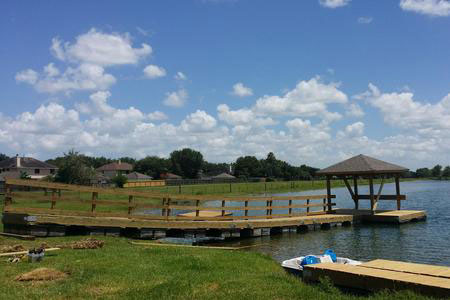
The fixed pile dock is the backbone of Texas lake waterfronts: pilings driven to refusal, treated structural framing, and a deck that stays put through storms, wakes, and decades of use. Jordan Marine Construction builds fixed pile docks across Lake Conroe, Lake Livingston, Lake Houston, and the Gulf Coast with our own pile-driving equipment and 40+ years of construction experience.
Because the foundation is driven — not jetted or pushed — a fixed pile dock carries real loads: boat lifts, boat houses, covered slips, and the daily traffic of a working waterfront. It is the right system for stable-depth shorelines and any structure that has to hold weight for the long term.
Request Your Free EstimateOur Fixed Pile Dock Construction Process
-
Site & Depth Assessment
We confirm water depth, bottom composition, and level history to verify fixed pile is the right system and set deck elevation.
-
Engineered Design & Permitting
Pile layout, framing, and decking are drawn to your site, and we coordinate the permit with SJRA, TRA, City of Houston, or USACE/GLO.
-
Pile Driving
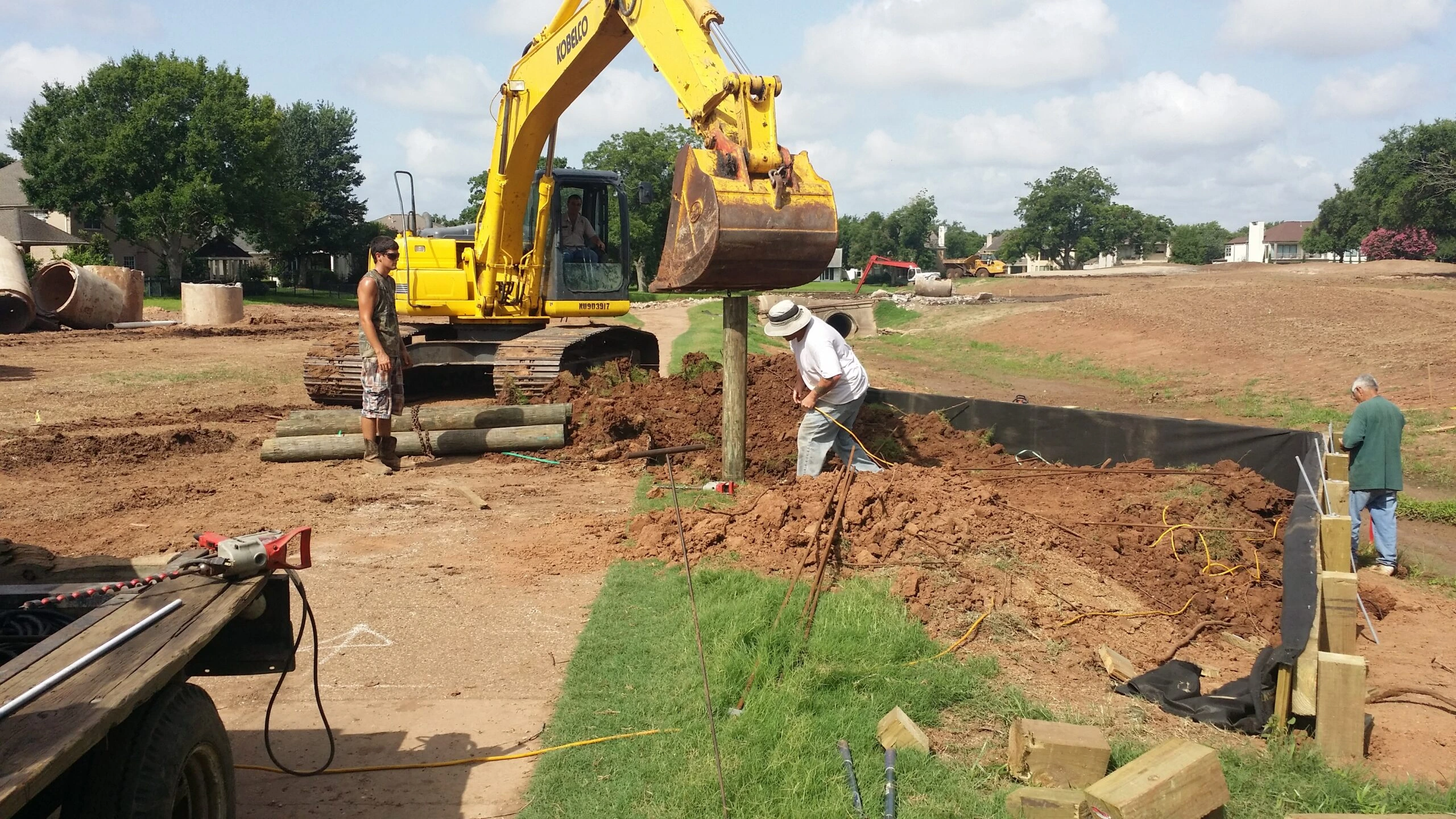
Every piling is driven to refusal with our barge-mounted or land-based equipment and verified for alignment before framing.
-
Framing, Decking & Finish
Treated structural framing, radius-edge or composite decking, and hardware finish the dock — with lifts and covers integrated as designed.
Materials & Treatment Specifications
Pilings and framing are marine-grade timber treated for the environment — 2.5 CCA saltwater, .60 freshwater — with hot-dip galvanized or stainless hardware. Decking is radius-edge treated timber or MoistureShield composite.
Why Fixed Pile Remains the Standard on Texas Lakes
A fixed pile dock is as simple and as permanent as waterfront construction gets: pilings driven to refusal into the lakebed, framing bolted to that foundation, decking over the frame. No flotation to maintain, no hinges or guides to wear, no seasonal adjustment — just a structure that stands still while the water and weather move around it. It's why the overwhelming majority of docks on Lake Conroe and Lake Livingston are fixed pile, and why ours are still standing decades after construction.
The system's strength is load capacity. Because every load path ends in driven piles, a fixed pile dock carries what floating systems can't: boat lifts and their point loads, boat houses and covered slips with real roof structures, and the live loads of a crowd on a summer weekend. If your waterfront plans include anything heavier than foot traffic, fixed pile is almost always the answer.
The construction quality that matters is at the bottom, where you'll never see it. Piles driven to refusal — verified pile by pile with our own equipment — versus piles jetted or pushed into disturbed soil is the difference between a dock that holds its lines for forty years and one that leans within ten. With 40+ years of construction experience, that foundation discipline is our default, not an upgrade.
Site Fit: Where Fixed Pile Wins and Where It Doesn't
Fixed pile suits stable-to-moderate water level swings, which describes most Texas reservoir shorelines most of the time. Deck elevation is set from the lake's recorded range so the structure rides above high water and remains usable in drawdown. On waters with extreme level swings, very deep water, or bottoms that won't take a pile, floating systems earn their place — and we build those too, so the recommendation follows your site rather than our preference.
Bottom conditions shape the drive: Conroe's clay coves, Livingston's sandier reaches, and the soft sediments of bayous and bay backwaters each read differently under the hammer, and embedment targets adjust accordingly. That judgment — knowing what the drive is telling you — is what decades on the same waters buys.
Every fixed pile dock is permitted through the controlling authority, framed in environment-treated timber (2.5 CCA saltwater, .60 freshwater), connected with hot-dip galvanized or stainless hardware, and decked in radius-edge timber or MoistureShield composite. The structure is designed to accept lifts and covers — now or later — without surgery.
Related Projects
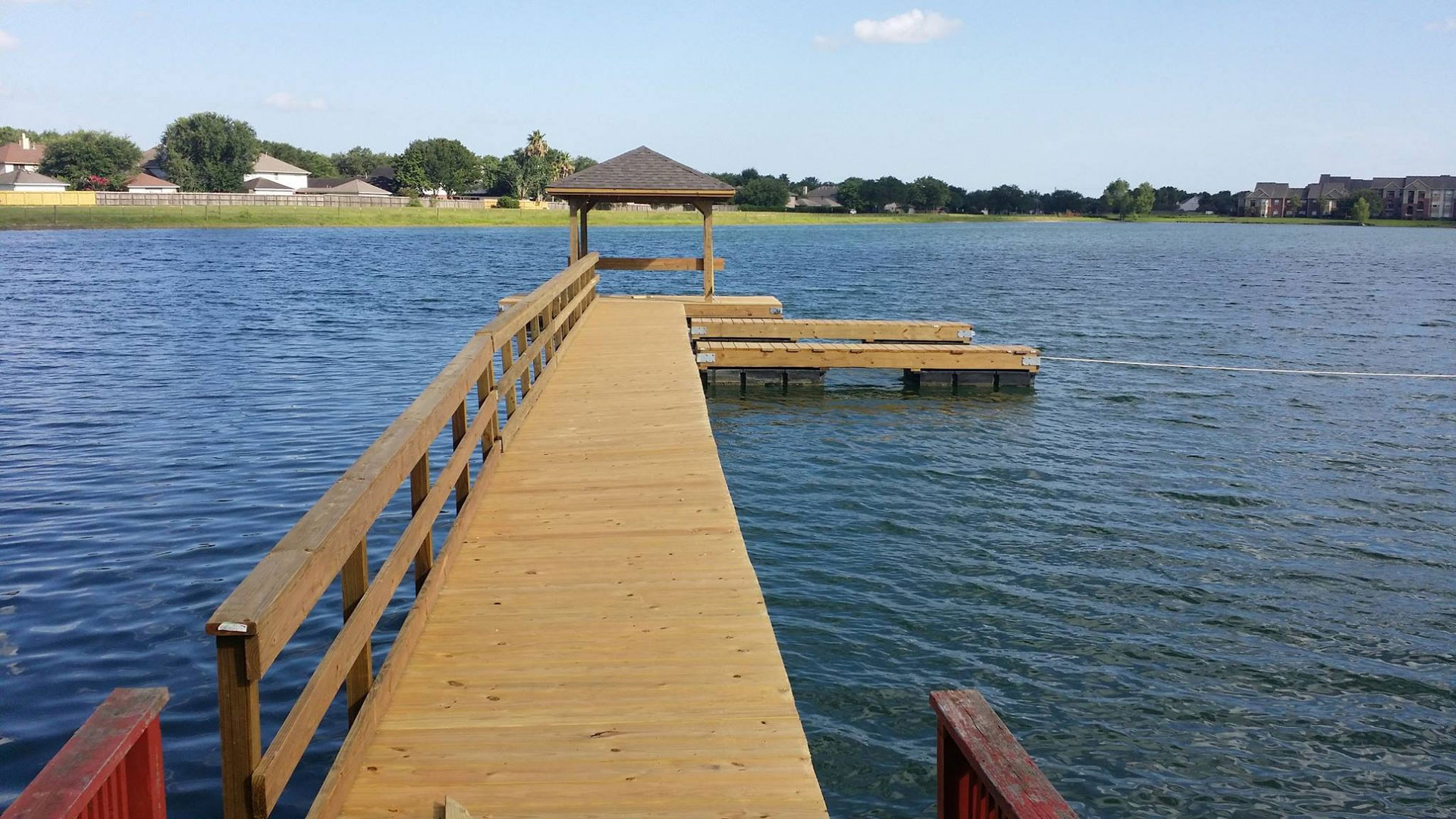
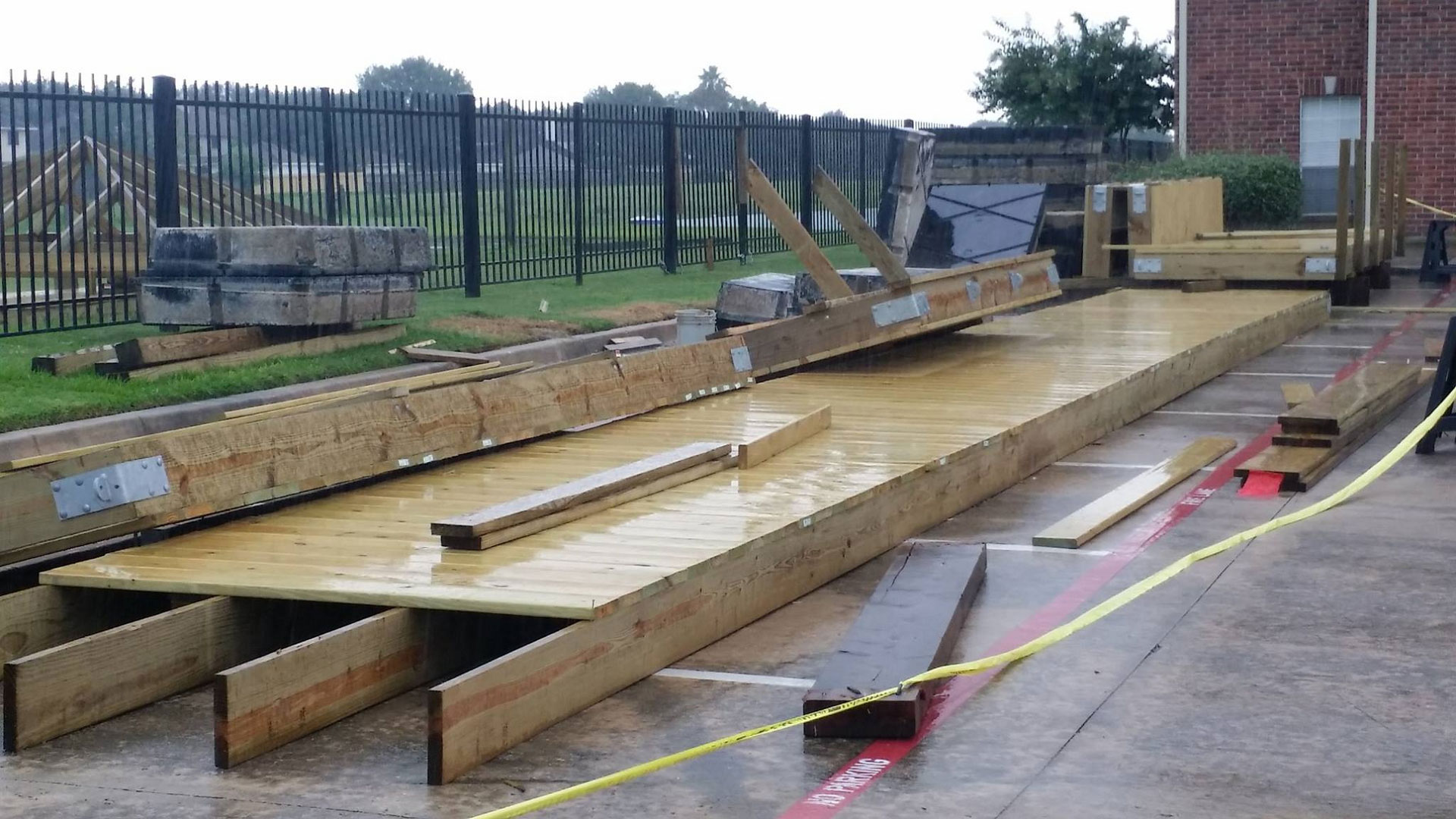
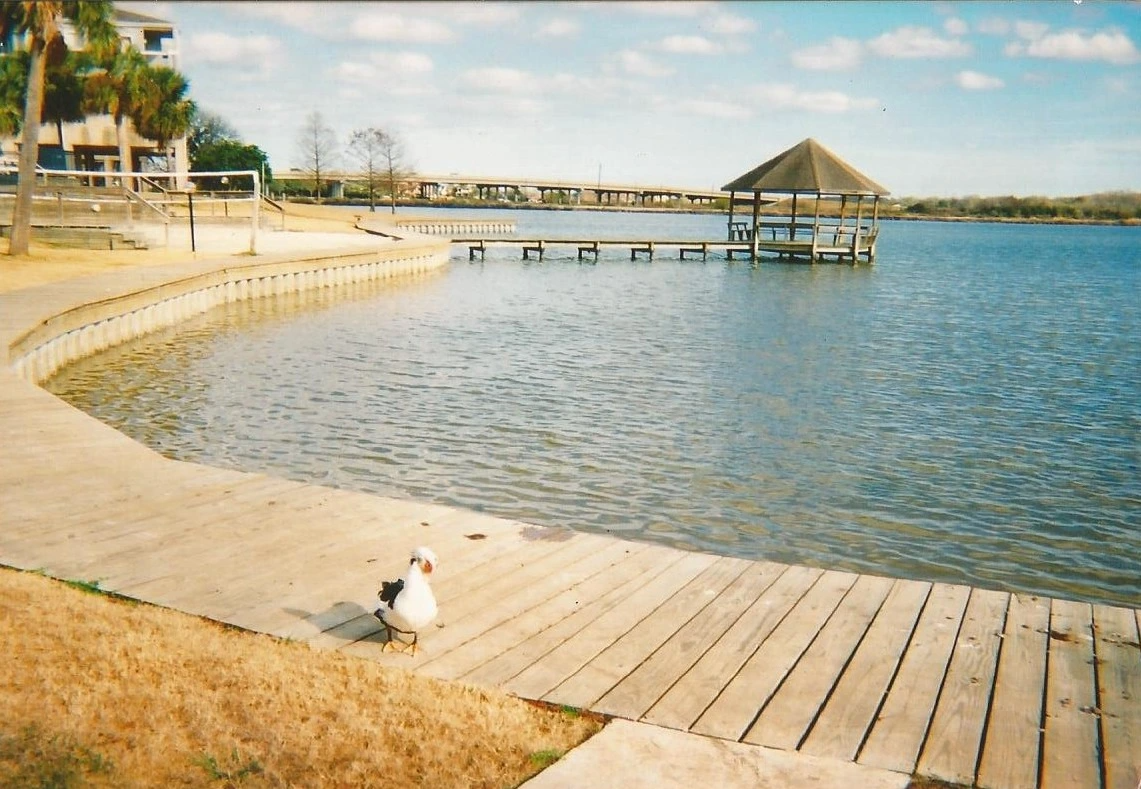
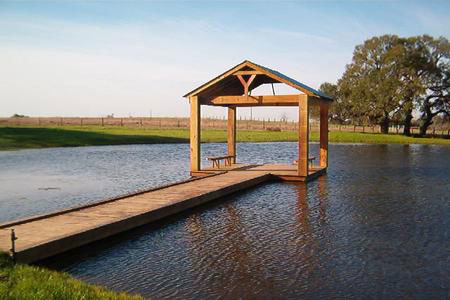
Where We Build Fixed Pile Dock Construction
We build fixed pile dock construction for waterfront communities across Greater Houston, Lake Conroe, Lake Livingston, and the Texas Gulf Coast. A few of the areas we serve:
Don't see your area? View all service areas or contact us.
Fixed Pile Dock Construction FAQs
Fixed pile or floating — how do I choose?
Fixed pile wins on stability and load capacity for stable-depth shorelines; floating adapts to large level swings. We assess your water and recommend honestly — we build both.
How long does a fixed pile dock last?
Built with correctly treated timber on piles driven to refusal, decades — the foundation typically outlives multiple deck surfaces. Treatment retention matched to the water is the key variable.
How much does a fixed pile dock cost?
Size, water depth, pile count, decking choice, and add-ons (lifts, covers) drive the number. A straight-walk fishing pier and a two-slip dock with sun deck are very different projects. Free itemized estimates put real numbers on your specific shoreline.
How deep does the water need to be for a fixed pile dock?
Fixed pile works from shallow shorelines out to depths our driving equipment comfortably reaches — most residential lake sites are well within range. Very deep water shifts the economics toward floating systems; we assess and recommend honestly.
Will a fixed pile dock survive floods?
Properly built ones routinely do: piles driven to refusal resist the lateral loads, and deck elevation set from real level history keeps framing above most events. After major floods, the fixed pile docks we see fail are overwhelmingly those with jetted piles or under-set decks.
Can a fixed pile dock be extended later?
Yes — new piles and framing tie into the existing structure cleanly when the original was built sound. It's one of the system's quiet advantages: expansion is addition, not reconstruction.
Related Services
Get a Free Fixed Pile Dock Construction Estimate
Tell us about your project and we'll provide a detailed, no-obligation estimate. Serving Greater Houston, Lake Conroe, Lake Livingston, and the Texas Gulf Coast.