

Treated timber remains the standard by which docks are judged: proven in Texas waters for generations, repairable for decades, warm underfoot, and the best value per foot of any dock material. Jordan Marine Construction builds wood docks across Lake Conroe, Lake Livingston, and the Houston Gulf Coast with 40+ years of construction experience in exactly this material.
The difference between a wood dock that lasts forty years and one that fails in fifteen is invisible at handoff: treatment retention matched to the water, pilings driven to refusal, and hardware that doesn't corrode. Those are our defaults, not upgrades.
Request Your Free EstimateOur Wood Dock Construction Process
-
Site Assessment & Design
We assess depth, bottom, and exposure, and design the dock and pile layout to your shoreline and use.
-
Permitting
We coordinate the permit with the controlling authority — SJRA, TRA, City of Houston, or USACE/GLO.
-
Pilings & Framing
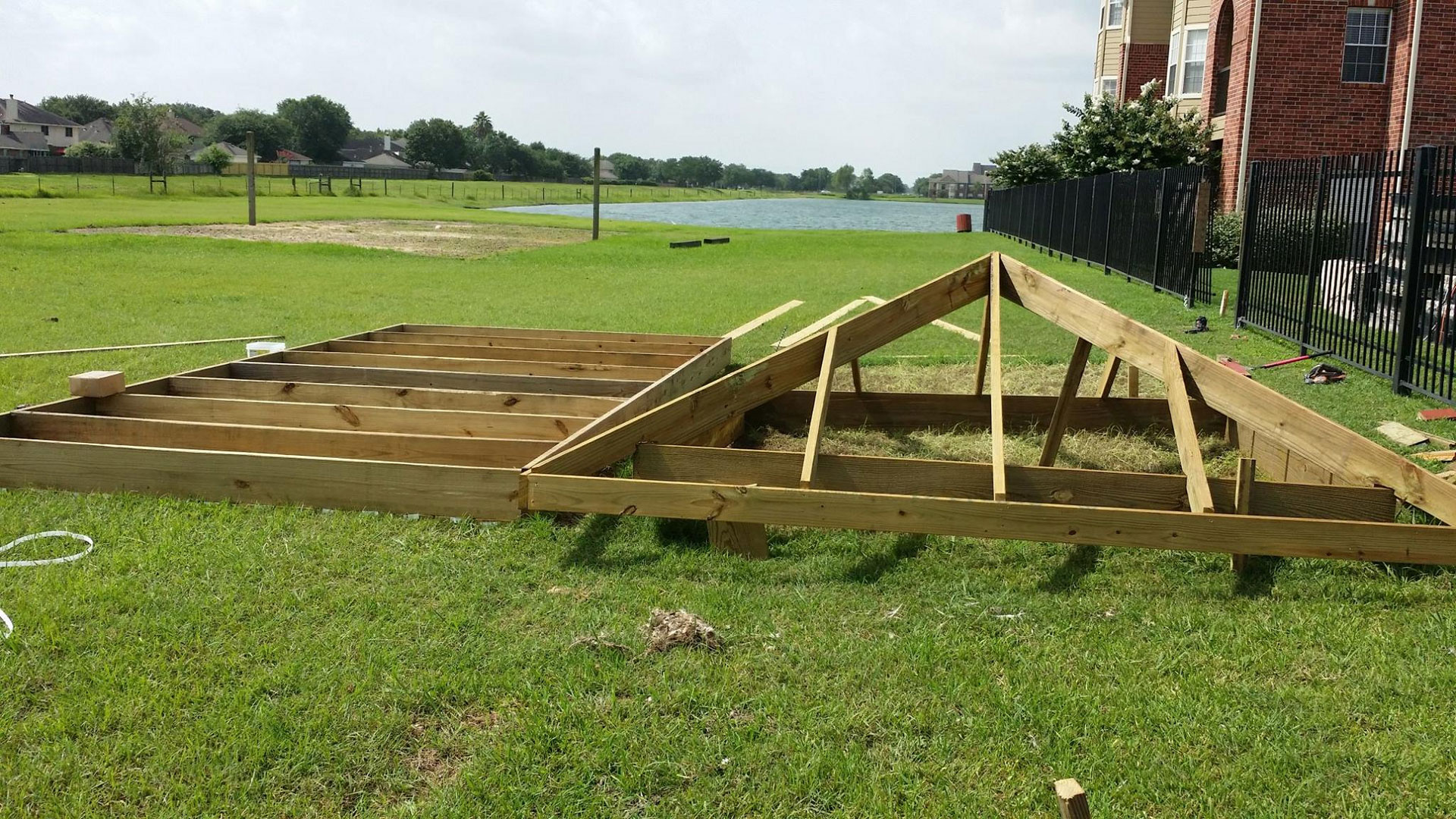
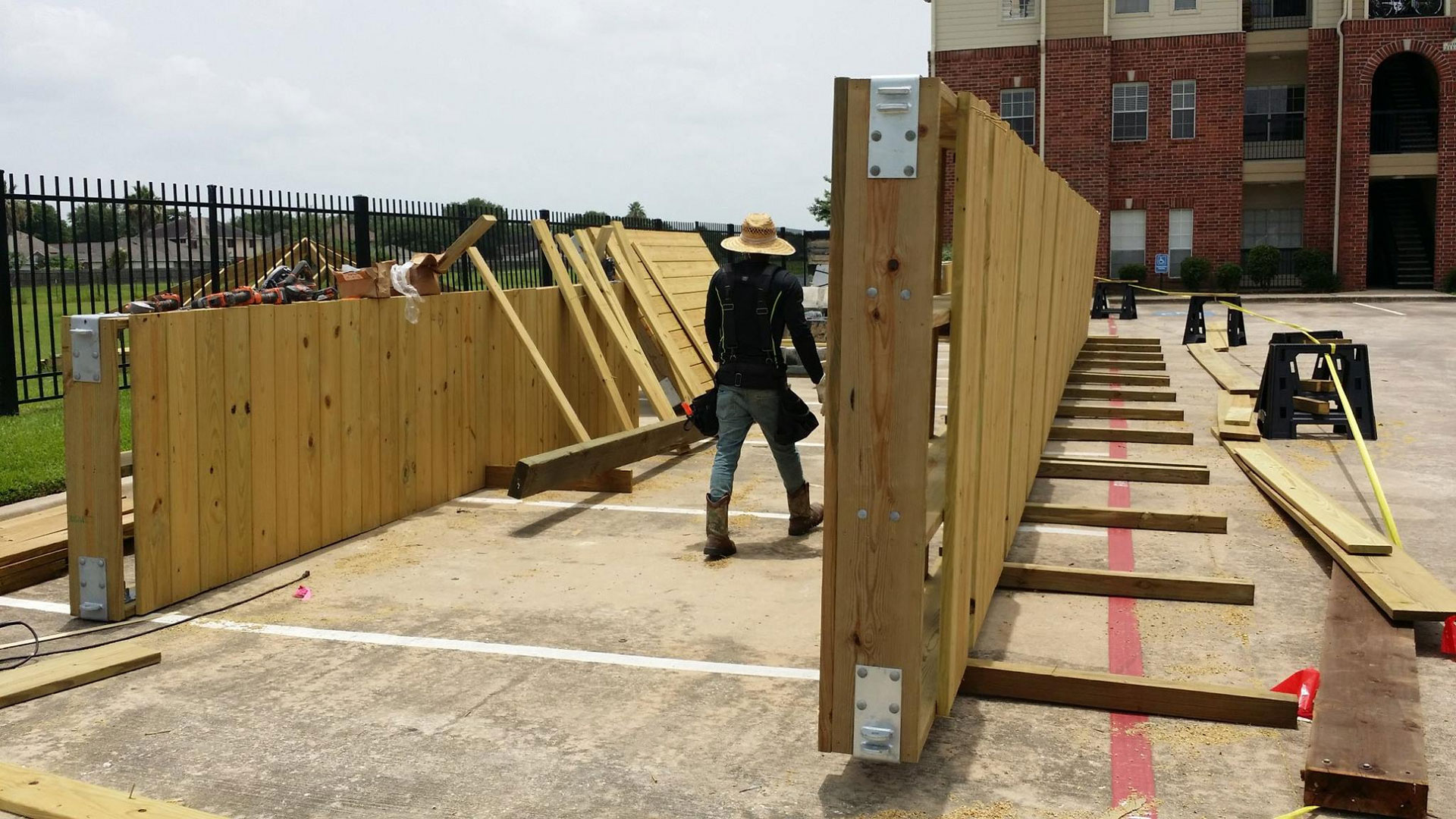
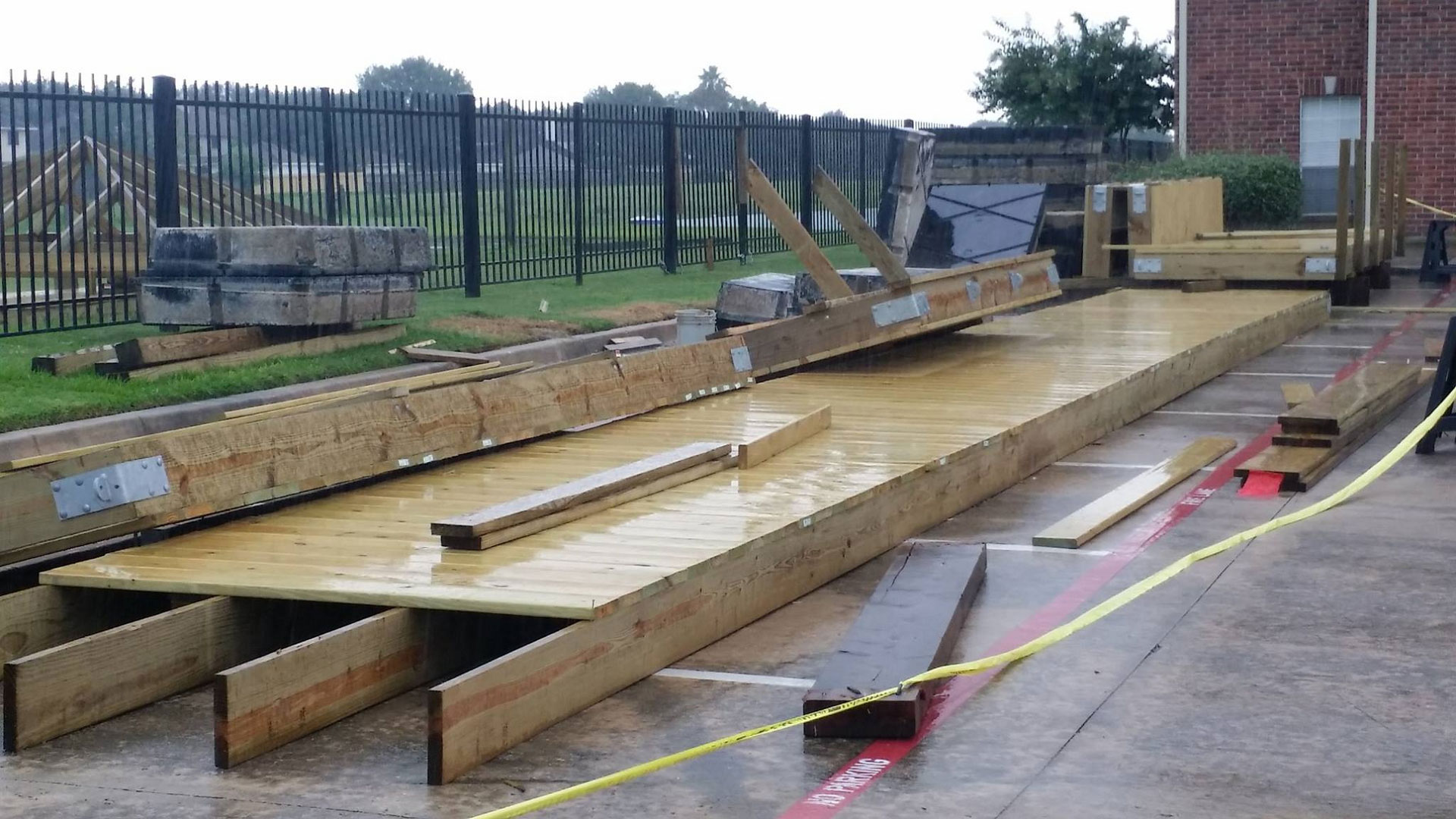
Marine-grade treated pilings driven to refusal, framed with treated structural lumber sized for marine loads.
-
Decking & Finish
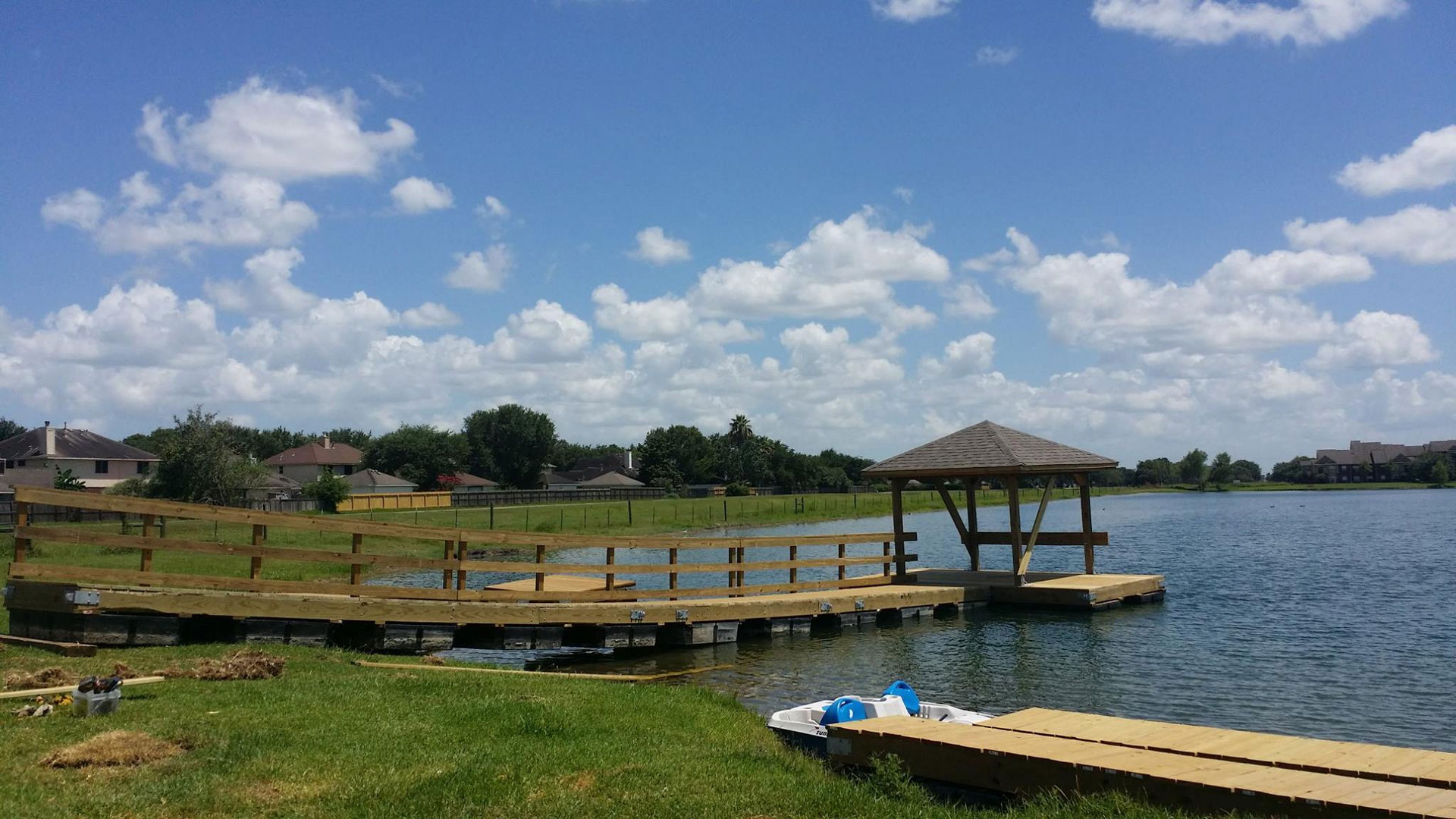
Radius-edge treated decking, corrosion-resistant fasteners, and finish details — with a sealing schedule to maximize life.
Materials & Treatment Specifications
All timber is treated for its environment — 2.5 CCA for saltwater, .60 for freshwater — the specification that determines whether wood survives Texas waters. Framing is sized to marine loads and connected with hot-dip galvanized or stainless hardware; decking is radius-edge for a clean, splinter-resistant surface.
Wood Docks Done Right: The Material Isn't the Problem
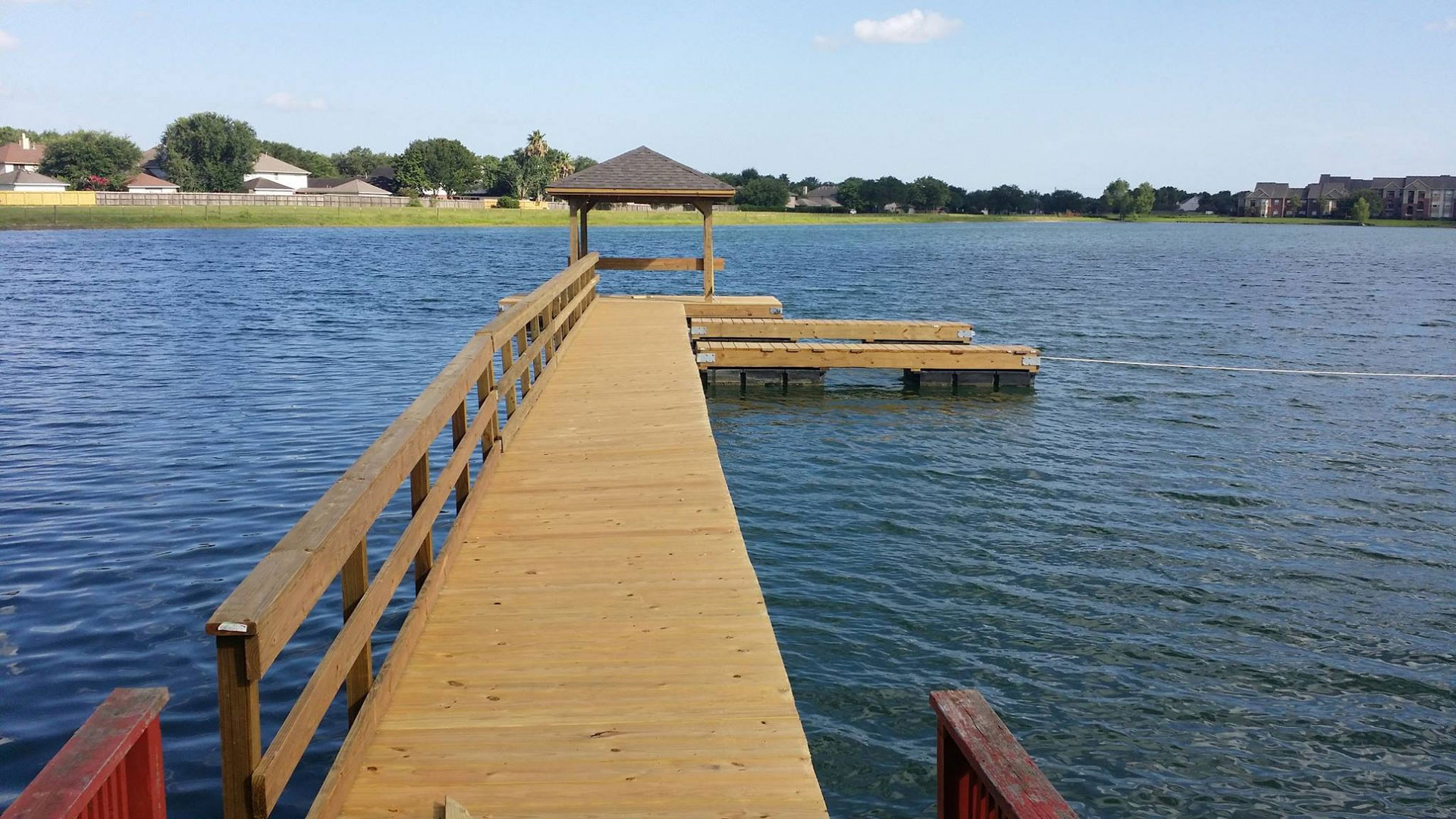
When a wood dock fails young, the autopsy almost never blames wood — it blames the wrong wood, the wrong hardware, or the wrong foundation. Lumber-yard boards treated to .25 or .40 retention in permanent water contact, fasteners rated for a backyard fence, piles jetted into soup: those are the actual killers. Specified correctly — 2.5 CCA treatment for saltwater, .60 for freshwater, hot-dip galvanized or stainless connections, piles driven to refusal — treated timber serves for generations on Texas lakes. We've spent 40+ years proving it.
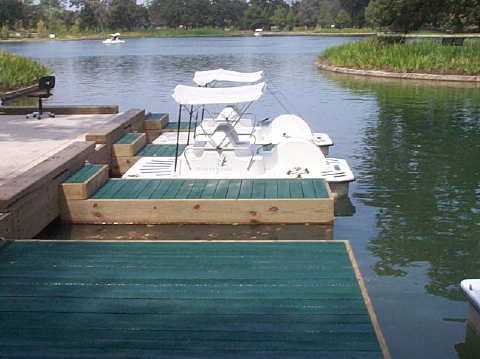
Timber's virtues are practical: the lowest cost per foot of any dock system, field-repairability that composites and metals can't match (any competent carpenter can replace a board in 2040), a natural look that suits wooded shorelines, and a deck that stays cooler underfoot than most composites in the Texas sun. For most residential docks, wood remains the value benchmark everything else is priced against.
The build standard is what we control: radius-edge decking for a clean splinter-resistant surface, framing sized to marine loads rather than porch spans, and every piece of timber specified to its exposure. The greenish CCA treatment weathers to silver-gray; the protection stays.
Owning a Wood Dock: The Honest Maintenance Story
Wood asks for care that composite doesn't, and pretending otherwise sells docks, not truth. The deck wants sealing or staining every 2–3 years to hold its color and slow surface breakdown; fasteners want an annual glance; and the waterline deserves attention every few seasons, because that wet-dry cycling zone is where timber ages fastest. Total burden: a weekend every couple of years, or a call to our dock sealing and staining crew.
The payoff for that care is a dock that's effectively immortal in parts: the driven foundation typically outlives two or three deck surfaces, and re-decking a sound wood frame — or upgrading it to MoistureShield composite later — costs a fraction of new construction. Wood keeps your options open in a way no other system does.
We build wood docks across Lake Conroe, Lake Livingston, Lake Houston, and the coast, permitted through each water's controlling authority and finished with a maintenance schedule matched to your site's sun and water exposure. Forty years from now, the dock we build this season should still be somebody's favorite place.
Related Projects
Where We Build Wood Dock Construction
We build wood dock construction for waterfront communities across Greater Houston, Lake Conroe, Lake Livingston, and the Texas Gulf Coast. A few of the areas we serve:
Don't see your area? View all service areas or contact us.
Wood Dock Construction FAQs
How long does a wood dock last in Texas?
With correct treatment retention, driven pilings, and periodic sealing, decades — the frame commonly outlives two deck surfaces. Under-treated lumber-yard material is what gives wood docks a short-life reputation.
What maintenance does a wood dock need?
Re-seal or stain the deck every 2–3 years, check fasteners annually, and keep an eye on the waterline. Our dock sealing & staining service handles it if you'd rather not.
Is a wood dock cheaper than composite?
Up front, meaningfully — treated timber is the least expensive quality decking, which is why it remains the default. Composite recovers the gap over years of skipped sealing. We quote both on request; the frame underneath is treated timber either way.
What's the best wood for a boat dock in Texas?
Pressure-treated southern yellow pine at the correct retention — 2.5 CCA for salt and brackish water, .60 for freshwater lakes — is the proven standard for structure and decking alike. The retention number matters more than the species label.
How do I keep my wood dock from splintering?
Radius-edge decking (our standard) resists splintering by design, and a sealing schedule keeps surface fibers from drying and breaking loose. A dock sealed every 2–3 years stays barefoot-friendly for decades.
Can you rebuild my old wood dock on its existing pilings?
If the piles are sound — and driven piles often are, long after the deck above them dies — yes, and it's excellent value. We inspect the foundation first and tell you honestly what it can carry.
Related Services
Get a Free Wood Dock Construction Estimate
Tell us about your project and we'll provide a detailed, no-obligation estimate. Serving Greater Houston, Lake Conroe, Lake Livingston, and the Texas Gulf Coast.