

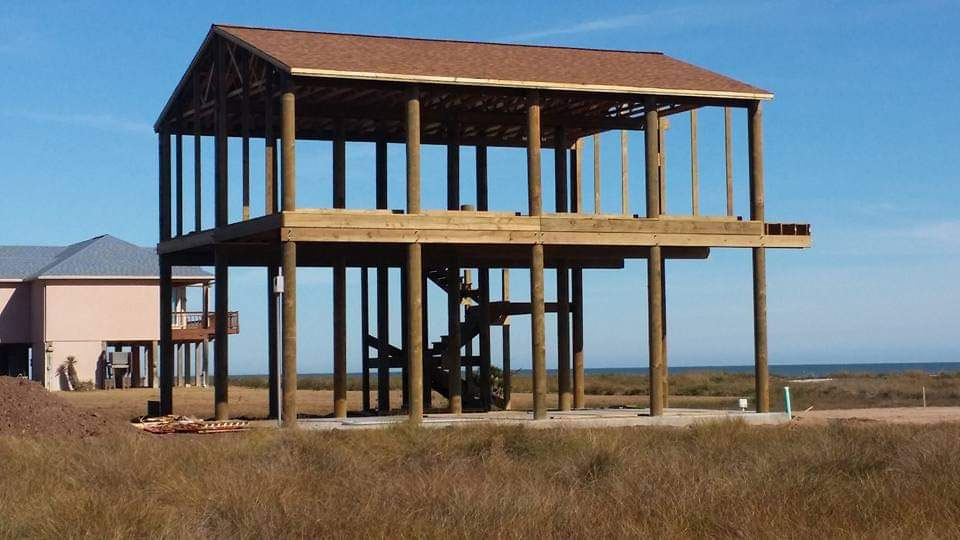
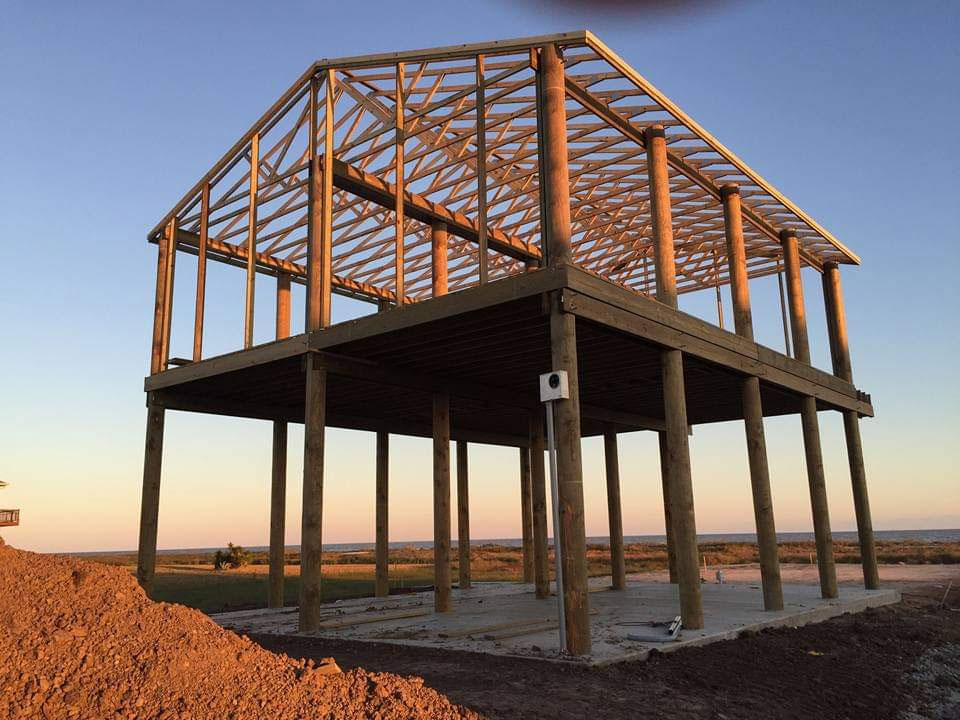
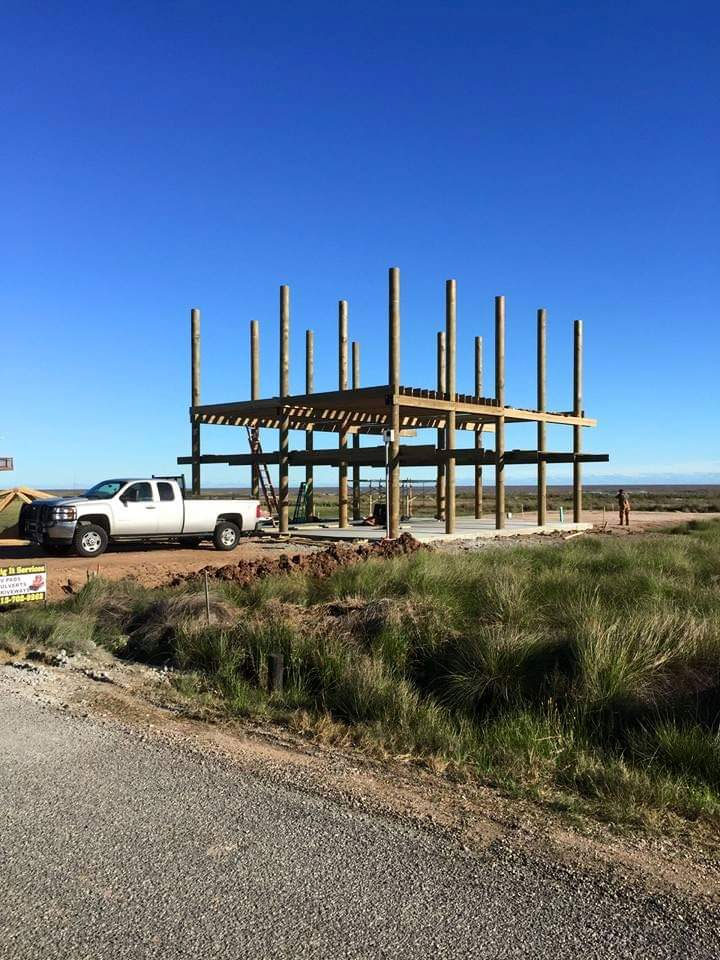
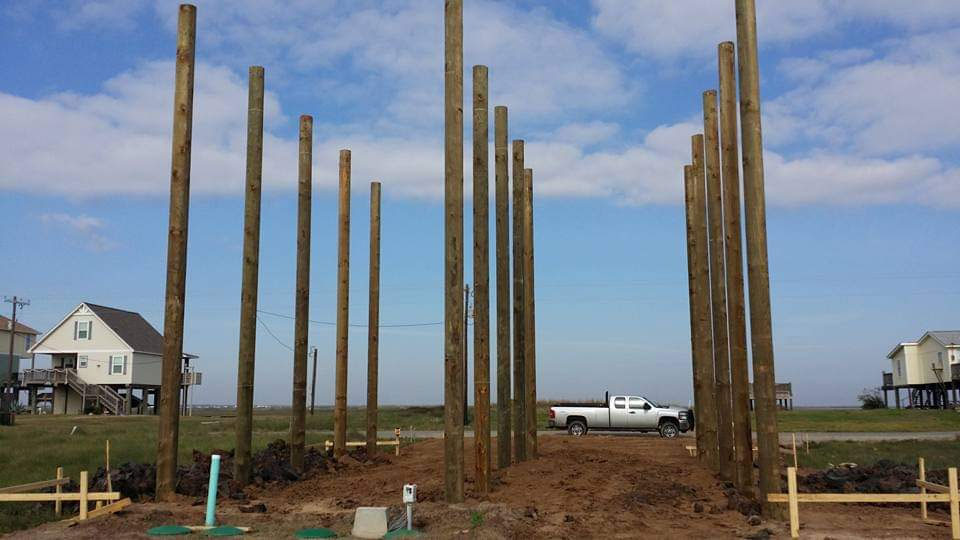
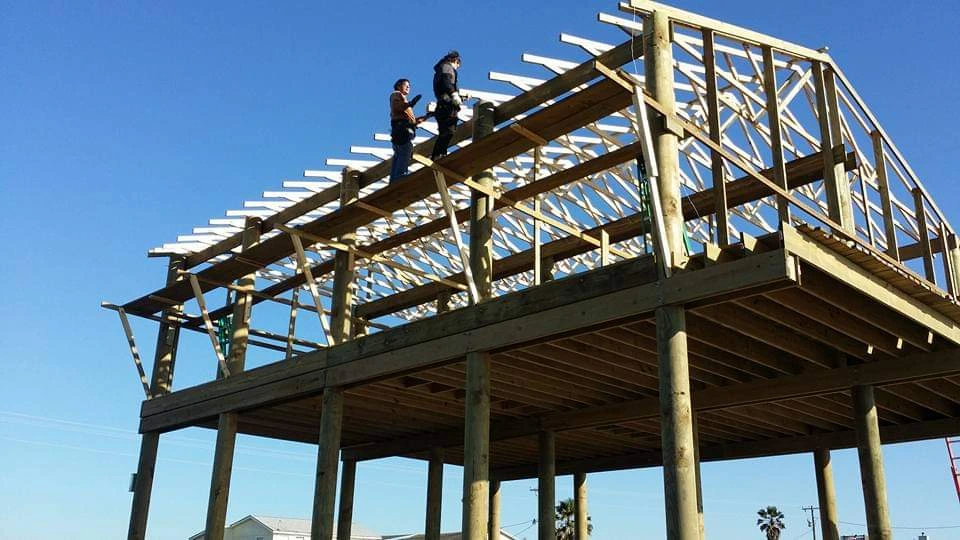
Pile driving is the foundation of nearly every marine structure, and it is core to what Jordan Marine Construction does. We drive piles accurately and to refusal for docks, piers, bulkheads, boat houses, bridges, and house pilings across Lake Conroe, Lake Livingston, and the Houston Gulf Coast.
With both barge-mounted and land-based capability, we can reach difficult shorelines and over-water locations that many builders cannot, giving your structure a foundation that holds for the long term.
Request Your Free EstimateOur Pile Driving Process
-
Geotechnical & Layout Review
We assess soil and bottom conditions and lay out the pile pattern required to carry the structure's loads.
-
Equipment Mobilization
We mobilize the right rig — barge-mounted for over-water work or land-based for shoreline access.
-
Driving to Refusal
We drive marine-grade piles to refusal so the foundation is stable under marine loads and storm conditions.
-
Verification
We verify alignment and embedment before framing begins.
Materials & Capability
We drive marine-grade timber piles treated for their environment (2.5 CCA saltwater, .60 freshwater) as well as composite and steel where specified. Barge-mounted equipment allows accurate over-water driving for piers, bridges, and bulkheads.
Driven to Refusal: Why the Method Matters as Much as the Pile
There are three ways to get a piling into the ground: jetting it in with water pressure, augering a hole and setting it, or driving it with impact equipment until the soil refuses further penetration. Only driving to refusal proves, pile by pile, that the foundation has reached load-bearing resistance. Jetted and set piles rely on disturbed, re-settled soil for their grip — which is why docks on jetted piles lean and rack after a few seasons of level changes and wave loading.
Jordan Marine Construction runs its own pile-driving equipment, barge-mounted for over-water work and land-based for shorelines and upland sites. Keeping this capability in-house means we control foundation quality on every project rather than inheriting whatever a subcontractor delivers — and it's why pile driving underlies everything else we build: docks, piers, boat houses, bulkheads, bridges, and house pilings.
Bottom conditions across our region vary enormously — sandy shorelines on Lake Livingston, clay bottoms on Conroe coves, soft sediments in Galveston Bay backwaters. Reading the drive (blow counts, penetration behavior) tells us what the soil is actually doing, and we adjust embedment targets accordingly instead of assuming a standard depth fits every site.
Barge-Mounted Capability: Reaching Sites Others Can't
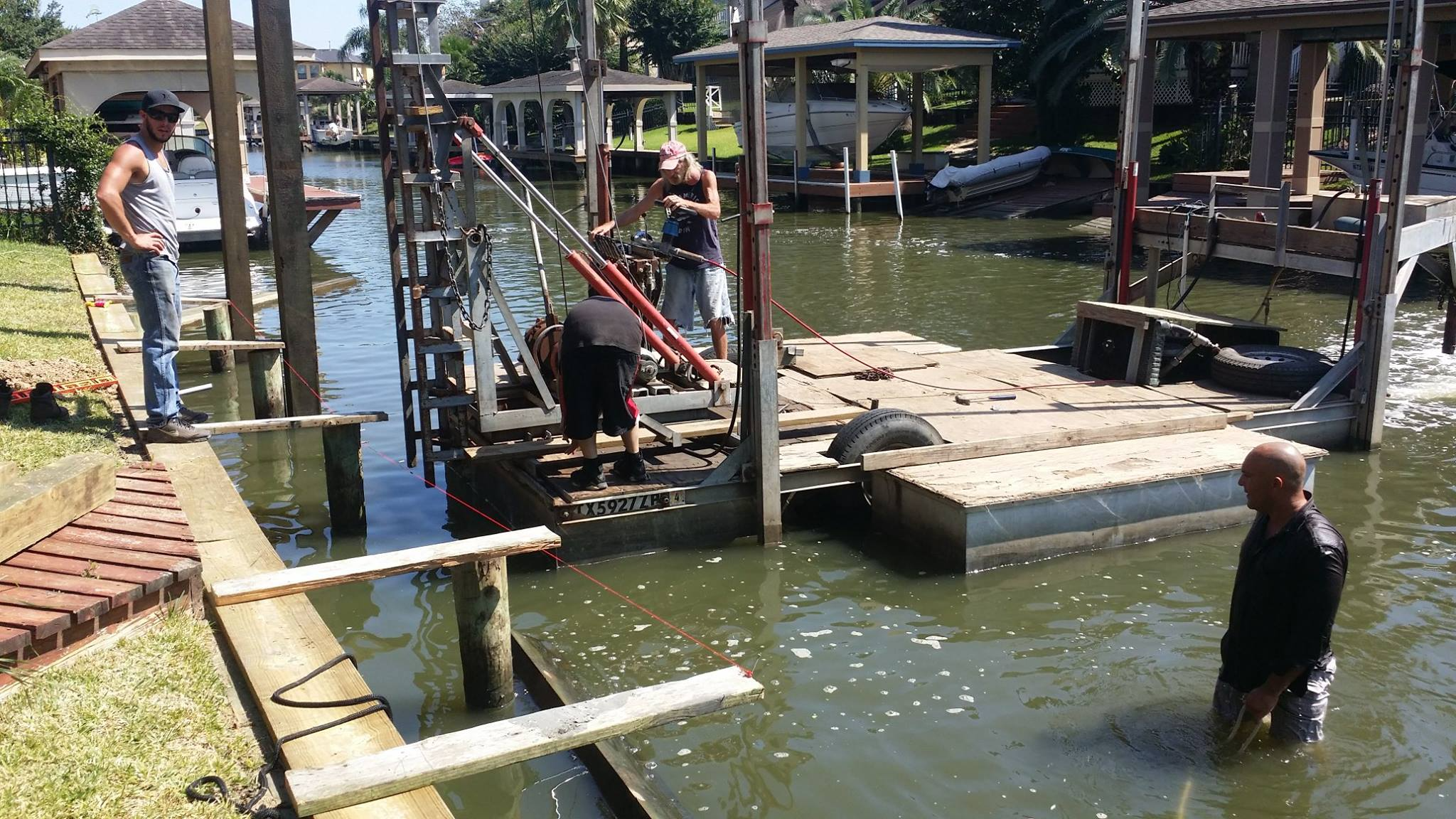
Many marine projects fail at the access stage: no room for a crane truck, a shoreline too soft for equipment, or a structure location simply too far off the bank. Our barge-mounted rig works from the water itself, which opens up over-water pier and bridge foundations, bulkhead lines along inaccessible banks, and repair work on structures that land equipment can't reach without tearing up the property.
Working from the water also protects what you've already built. Driving from a barge means no rutted lawns, no demolished landscaping, and no temporary roads across the septic field — practical considerations that matter on finished waterfront properties and established communities.
We drive marine-grade treated timber (2.5 CCA saltwater, .60 freshwater), composite, and steel piles, matched to the structure and site. Timber remains the standard for most lake structures; steel and composite earn their place on high-load, high-corrosion, or specialty applications.
Related Projects
Where We Build Pile Driving
We build pile driving for waterfront communities across Greater Houston, Lake Conroe, Lake Livingston, and the Texas Gulf Coast. A few of the areas we serve:
Don't see your area? View all service areas or contact us.
Pile Driving FAQs
Can you drive piles over water?
Yes. Our barge-mounted pile-driving equipment lets us work over open water for docks, piers, bridges, and bulkheads, in addition to shoreline and land-based work.
What pile materials do you drive?
Marine-grade treated timber, composite, and steel piles, selected to the structure and site conditions.
What does 'driving a pile to refusal' actually mean?
Refusal is the point where the soil's resistance effectively stops further penetration under repeated hammer blows — objective evidence the pile has reached bearing capacity. It's measured pile by pile during the drive, which is why driven foundations are verifiable in a way jetted or set piles never are.
Can you drive piles at a site with no land access?
Yes — that's what our barge-mounted equipment is for. We routinely drive piles for piers, bulkheads, and bridges entirely from the water, with no equipment crossing the upland property at all.
Timber, steel, or composite piles — how do you choose?
Treated timber (2.5 CCA salt / .60 fresh) is proven and cost-effective for most docks, boat houses, and residential structures. Steel handles high loads and tall bulkheads; composite resists borers and corrosion where chemistry is hostile. We spec to the structure's loads and the site's water.
Do you do pile driving for other contractors or engineers?
Yes. Builders, engineers, and property owners bring us the foundation phase of their projects — we drive to the engineered spec and document embedment, then hand off for the structure above.
Related Services

Get a Free Pile Driving Estimate
Tell us about your project and we'll provide a detailed, no-obligation estimate. Serving Greater Houston, Lake Conroe, Lake Livingston, and the Texas Gulf Coast.