

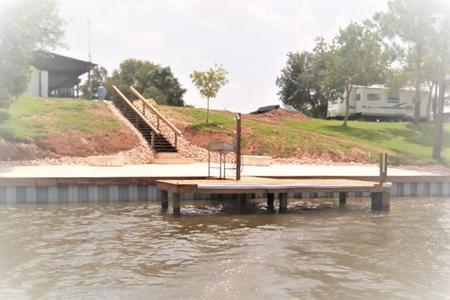
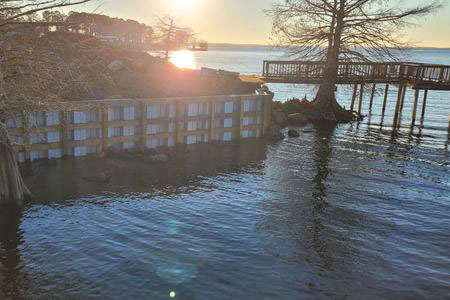
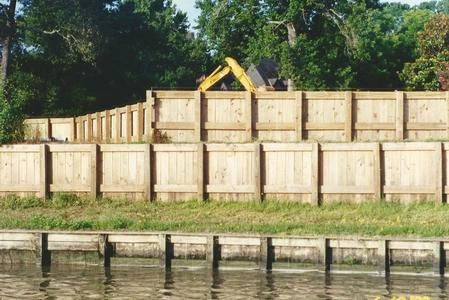
A vinyl bulkhead is a durable, low-maintenance, cost-effective way to stop shoreline erosion and protect your waterfront. Jordan Marine Construction installs vinyl sheet-pile bulkheads across Lake Conroe, Lake Livingston, Clear Lake, and the Houston Gulf Coast.
Vinyl never rusts or rots, resists marine borers, and keeps its clean appearance for years — making it one of the most popular shoreline-protection options for residential and lake-community properties.
Request Your Free Estimate What does a bulkhead cost? See real per-foot prices from our 2026 projects →Our Vinyl Bulkheads Process
-
Shoreline Assessment
We evaluate bank height, soil, and water conditions to confirm vinyl is the right system and engineer the wall.
-
Design & Permitting
We specify sheet profile, embedment, whalers, and tie-backs, and coordinate the required permits.
-
Sheet Driving & Structure
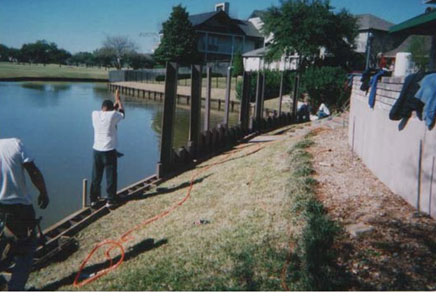
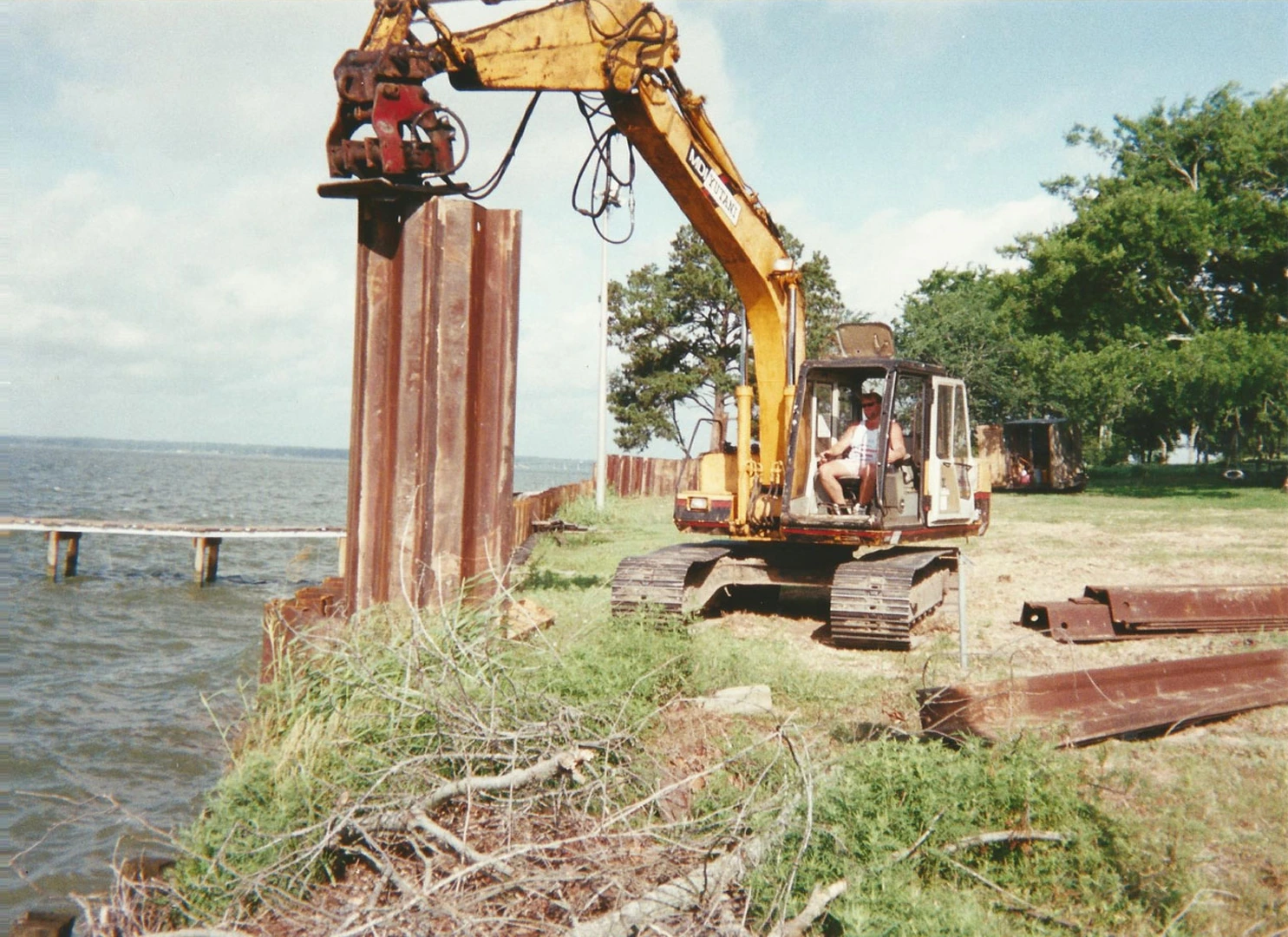
We drive vinyl sheet piling to the engineered depth and install whalers and tie-back anchors.
-
Backfill & Finish
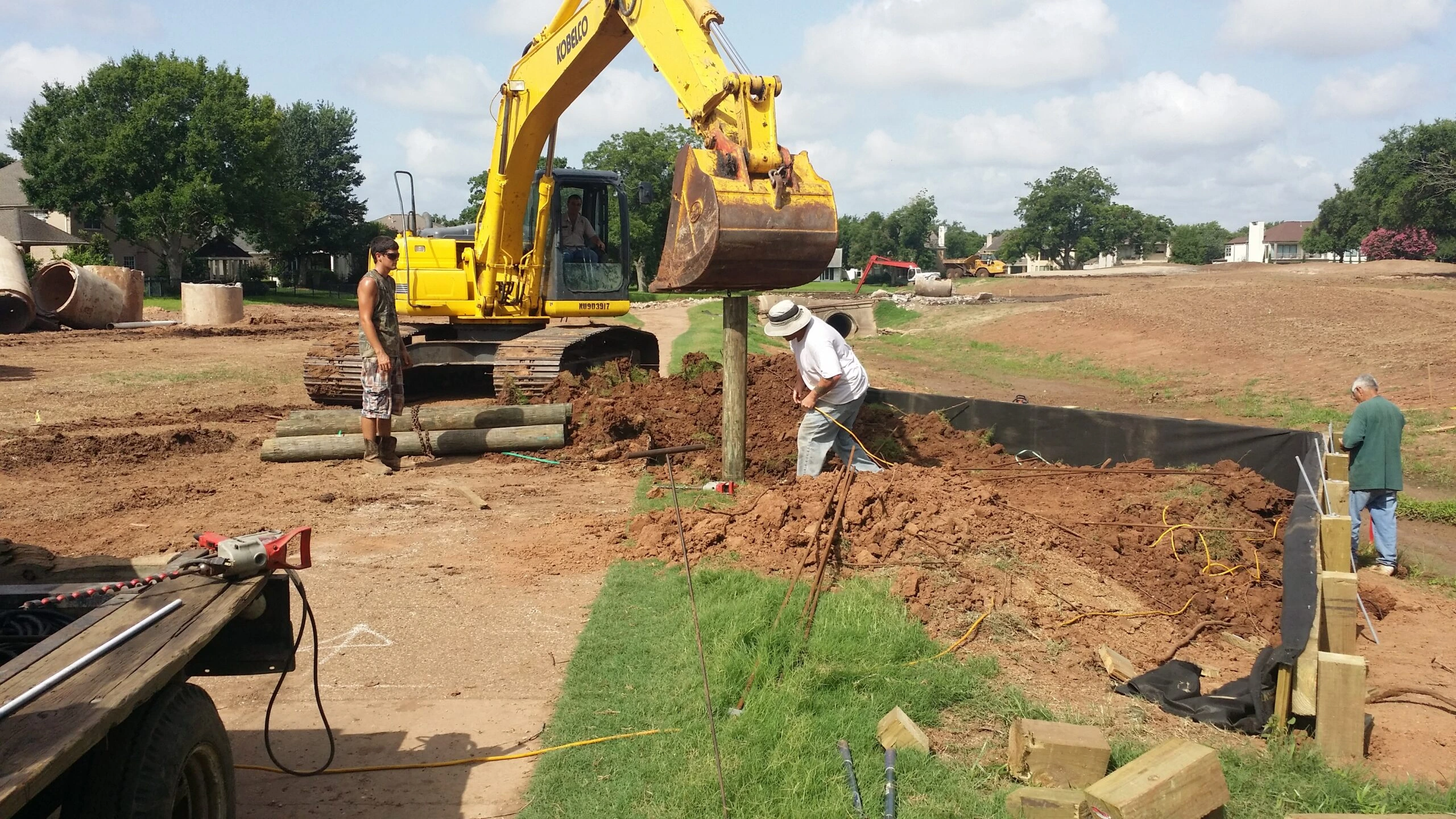
We backfill, compact, and restore grade and sod behind the new wall.
Materials & Engineering
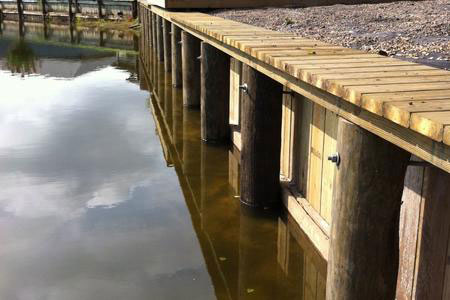
We use top-tier vinyl sheet piling with engineered embedment, treated or composite whalers, and hot-dip galvanized or stainless tie-back hardware. Vinyl is corrosion-proof and rot-proof for long maintenance-free service.
Why Vinyl Has Become the Default Choice on Texas Lakes
Vinyl sheet piling solved the two problems that plague the older bulkhead materials: it cannot rust like steel and cannot rot or be eaten by marine borers like timber. For the low-to-moderate retained heights typical of residential lake shorelines, that makes vinyl the sweet spot — long service life, clean appearance that doesn't streak or weather, and a cost well below steel. It's why the majority of new residential bulkheads on Lake Conroe and Lake Livingston are vinyl.
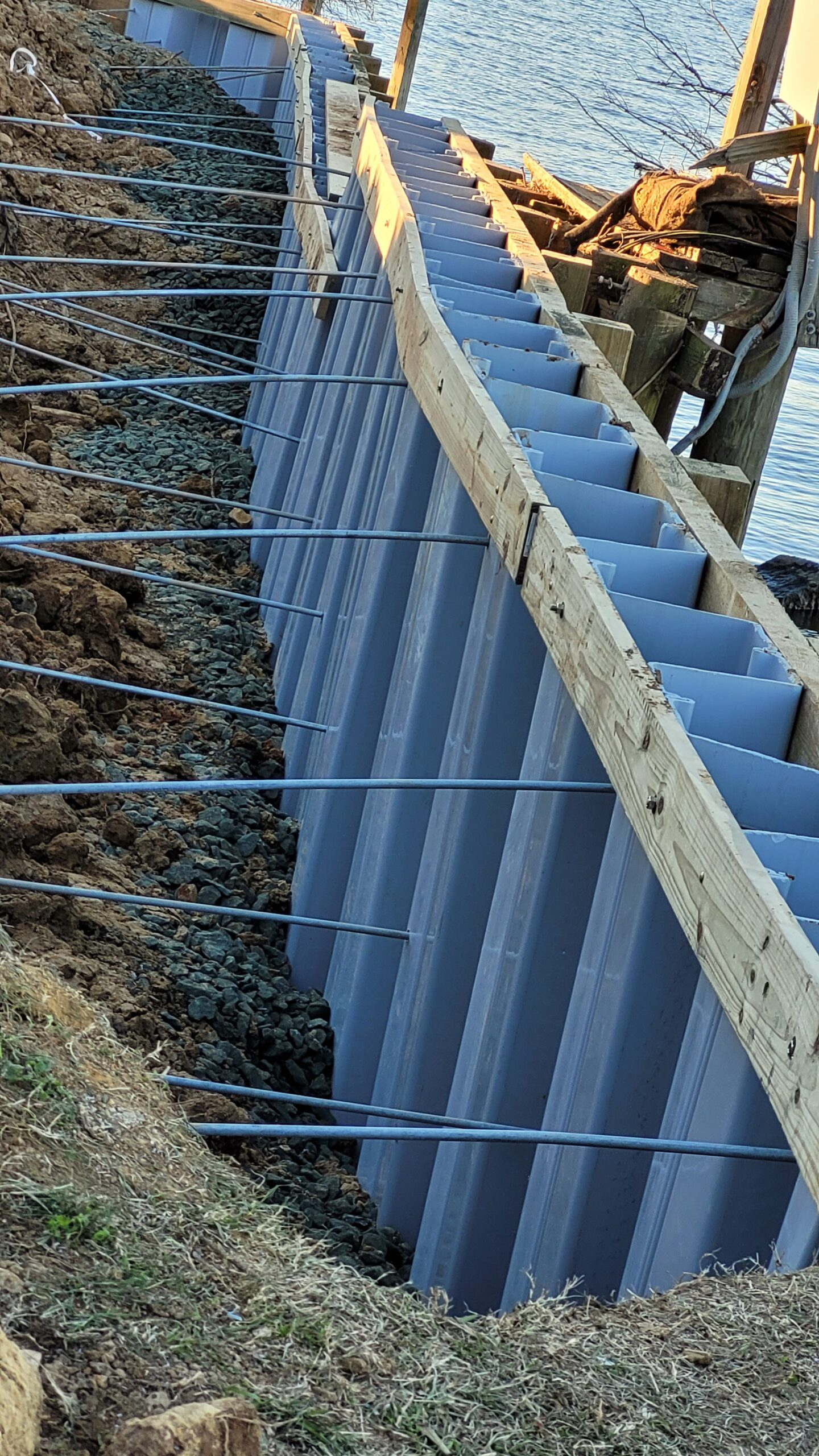
The material is only half the wall. A vinyl bulkhead performs because of what you can't see: sheets driven to engineered embedment below the mudline, whalers spreading loads along the wall face, tie-back rods to deadman anchors buried in stable soil, and drainage that relieves the hydrostatic pressure that pushes walls over. We engineer each of those elements to the bank height, soil, and water conditions of your specific shoreline.
Vinyl's interlocking sheet profile also seals well, which keeps backfill from washing through joints — the failure mode that creates sinkholes behind older timber walls. Combined with proper compacted backfill, that means the lawn behind a well-built vinyl wall stays put.
Vinyl vs. Wood vs. Steel: An Honest Comparison
Timber is the lowest up-front cost and has traditional appeal, but even correctly treated wood eventually weathers, and its hardware and whalers need attention over the decades. Steel is the strength king for tall walls and high-energy shorelines at the highest price. Vinyl sits between: corrosion-proof, rot-proof, borer-proof, essentially maintenance-free, with strength appropriate to most residential retained heights.
Where vinyl reaches its limits — very tall banks, heavy surcharge loads, extreme wave exposure — we'll recommend steel and explain why. Where budget rules and conditions allow, a properly built timber wall still serves well. Because we build all three systems, our recommendation follows your site rather than a product line we're locked into.
Every wall includes permitting through the controlling authority (SJRA, TRA, City of Houston, or USACE/GLO), engineered embedment and tie-backs, and finished backfill, grade, and sod restoration — a complete protected shoreline, not just sheets in the water.
Related Projects
Where We Build Vinyl Bulkheads
We build vinyl bulkheads for waterfront communities across Greater Houston, Lake Conroe, Lake Livingston, and the Texas Gulf Coast. A few of the areas we serve:
Don't see your area? View all service areas or contact us.
Vinyl Bulkheads FAQs
How long does a vinyl bulkhead last?
Vinyl sheet piling resists rot, rust, and marine borers and can last for decades with minimal maintenance when properly engineered and installed.
Is vinyl cheaper than steel?
Vinyl is typically more cost-effective than steel for residential shorelines while still providing excellent, long-lasting erosion control. We'll recommend the right system for your site.
How much does a vinyl bulkhead cost per foot?
Cost per linear foot depends on wall height, embedment depth, tie-back requirements, site access, and demolition of any existing wall. Vinyl typically lands well below steel and moderately above timber for the same wall. We provide free per-foot itemized estimates after assessing your bank.
Can vinyl bulkheads handle boat wake and storm waves?
Yes, within engineered limits. Residential lake wave and wake loading is well within vinyl's capability when embedment and tie-backs are designed correctly. For extreme exposure — long fetch, tall retained heights, commercial loading — we'll recommend steel honestly.
Does the color fade or the vinyl get brittle in the Texas sun?
Quality vinyl sheet piling is UV-stabilized for decades of exposure. Some slow, even weathering occurs over many years, but the structural performance doesn't degrade the way timber weathers or unprotected steel corrodes.
Can you replace my old bulkhead with vinyl without tearing up my yard?
Often, yes. Where conditions allow we drive the new vinyl wall directly in front of the failing one and tie it back over the old wall's line, avoiding full excavation of the bank. We assess this during the site visit — it's a major cost and disruption saver when feasible.
How deep are vinyl sheets driven?
Embedment below the mudline is engineered from the retained height and soil — a common rule of thumb is embedment comparable to the exposed height, but we size it to your actual bank and bottom conditions rather than a formula.
Related Services
Get a Free Vinyl Bulkheads Estimate
Tell us about your project and we'll provide a detailed, no-obligation estimate. Serving Greater Houston, Lake Conroe, Lake Livingston, and the Texas Gulf Coast.